

Knit the Fish Scale Stitch: Easy 4-Row Pattern for a Textured, Scaly Look
The knitted fish scale stitch creates an attractive, textured pattern that looks like overlapping scales. It's a simple 4-row slip-stitch repeat that works beautifully in bulky yarn for scarves, hats, cowls or sweater panels. This guide clarifies the basic pattern, gives materials and abbreviations, and offers tips for a tidy finish.
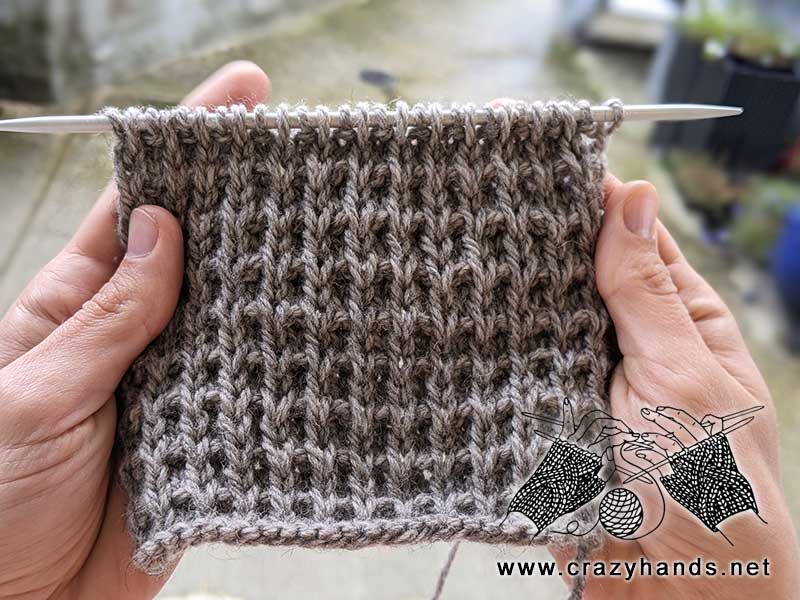
Swatch caption: Swatch of the knitted fish scale stitch worked in bulky eco wool, showing the textured overlapping 'scales'.
Knitting materials and tools:
- DPN 4 mm (UK 8 or US 6) — or use straight or circular needles in the same size if you prefer
- Knit Picks Simply Wool (Bulky) – 100% Eco Wool. 100 grams - 193 yards per skein
Common abbreviations:
- k – knit
- p – purl
- st(s) – stitch(es)
- sel s – selvage stitch: slip the first stitch purlwise, work to the last stitch, purl the last stitch
- wyib – with yarn in back
- wyif – with yarn in front
Fish scale knit pattern:
Cast on a multiple of 2 sts plus 2 selvage stitches.
Row 1 (RS): sel s, knit to last stitch, sel s. (i.e., sel s, knit all sts, sel s)
Row 2 (WS): sel s, purl to last stitch, sel s. (purl all sts)
Row 3 (RS): sel s, *k1, slip next st wyib; repeat from * to last stitch, sel s.
Row 4 (WS): sel s, *slip next st wyif, k1; repeat from * to last stitch, sel s.
Repeat Rows 1–4 for the pattern. The slipped stitches create the elongated 'scale' shapes; working the slip stitches with the yarn in back on Row 3 and in front on Row 4 produces the tuck and overlap that define the motif.
Notes and tips:
- Work a small swatch first to check how the stitch looks with your chosen yarn and needle size — the scale effect is more pronounced in bulkier yarns.
- Keep tension even when slipping stitches. If slipped stitches are too tight or too loose they will distort the scale shape.
- If you prefer no visible selvedge, omit the sel s and adjust cast-on accordingly (just use a multiple of 2).
- You can use this pattern flat (as written) or adapt it for knitting in the round by converting WS rows to their round equivalents; when knitting in the round, swap selvedge handling as needed.
- Light blocking can help even out the scales and relax the fabric slightly — test on a scrap before blocking a finished garment.
Enjoy experimenting with color and yarn weight — stripes, variegated yarns or contrast borders can all highlight the fish scale texture.